
You have a greeting card and a small plan: ask him to get coffee with you. A QR code greeting card can carry that invitation. Write a personal note on the paper, let the code open your question, and check the finished print before you hand it over. The handwritten part should still make sense if he never scans it.
For this example, you're Emma, inviting a guy you already know. You're giving him a card yourself, perhaps tucked inside a larger greeting card. The digital part adds a way to answer and choose a day; it doesn't replace your name or make him owe you a date.
What will he see after scanning your QR code greeting card?
Choose the destination before you decorate the paper. For a date invitation, the first thing he sees should be a short question he can answer. A specific, modest plan is easier to consider than a mysterious promise of a huge surprise.
Your opening message could be:
"I've got a coffee date in mind. Want to join me this weekend?"
You have named the plan and asked a question, without requiring him to guess what the scan is for.

That gives the card a purpose. You can add coffee and a walk as activity options, with a couple of days you can actually manage. Don't build a full itinerary around his yes before you've asked him.
With a thetinyus invitation, the question and Yes and No buttons appear first. The photo, voice note, suggested days and activities come after a yes. So put the essential invitation in those opening words. Don't leave "this is a date" tucked away in a voice note he hasn't heard yet.
What can you write beside the code?
Give him a reason to scan and enough context to feel comfortable opening the link. Your greeting can be warm without turning the scan into a test of how much he likes you.
For someone you've been flirting with:
"I like our coffee conversations. There's an invitation from me inside. Scan it when you have a quiet minute. - Emma"
Signing the note takes the uncertainty out of the printed card's playful introduction.

For a birthday greeting to someone you already know:
"Happy birthday! I hope your day includes excellent cake. I also have a coffee date to suggest - the little card opens it. - Emma"
For a card with no special occasion:
"No occasion, just a question I've wanted to ask you. The code opens my invitation. - Emma"
Choose one note rather than stacking all three. Handwriting a detail from your own conversations will do more than filling every corner with hearts. Keep the greeting separate from the invitation: a birthday wish should remain a birthday wish even if he declines the date.
How do you print both sides without spoiling the scan?
Your print template produces a QR card measuring 57 x 89 mm, with a design on each side. "Guess who it's from?" appears on the front; turn it over for "Scan the QR code". You can hand over that small card directly or slip it inside your handwritten greeting.
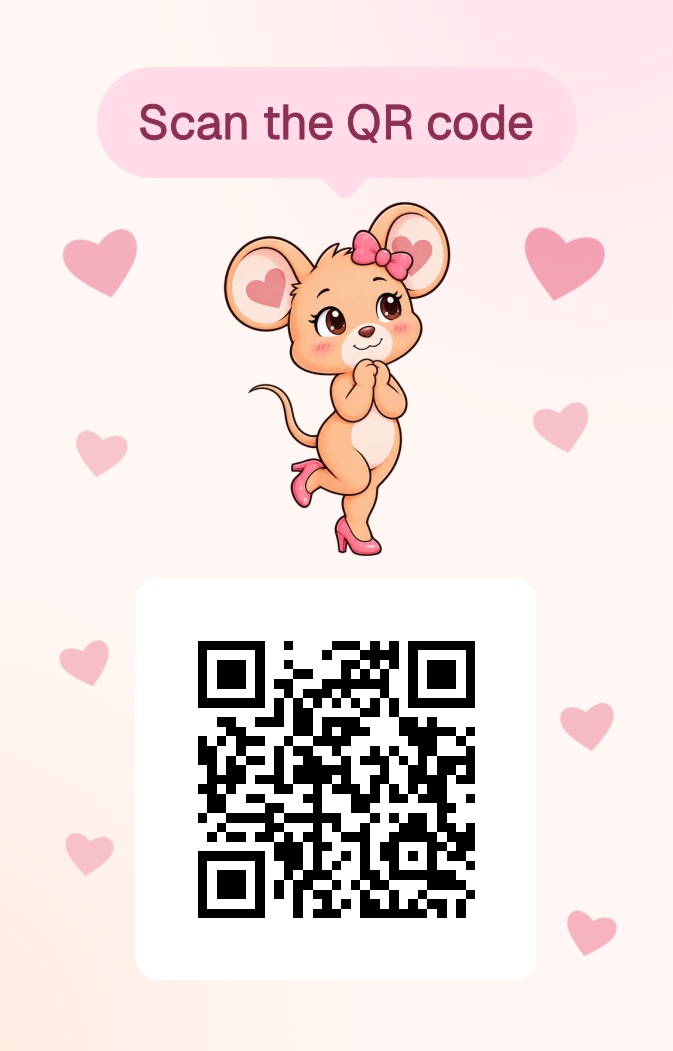
Use the supplied template rather than copying a screenshot of the code into a new design. Make one plain-paper proof before using your preferred paper:
- Check the print scale. Use actual size and confirm the card dimensions in the print preview. Avoid stretching the design to fill the page.
- Check the back's direction. Follow your printer's instructions for two-sided printing. Hold the proof like a card and turn it over to see whether the back is upright.
- Leave the code's border alone. Keep pen marks, tape and decorations away from the blank space around it. The QR code margin guidance specifies a clear border four small code squares wide on every side.
- Scan the final paper copy. Check it after cutting, under the light he'll use. Confirm that it opens the intended invitation, then close the page without answering.
Use the test link in My invitations to try the working buttons without counting as his open. Don't submit Yes or No through the card you're preparing for him: an invitation accepts one answer, and only the first counts.
Emma's coffee plan below shows what the printed card opens. The same question could arrive as a link, but the paper gives you room for a greeting he can keep.
This is what they'll see
I've got a coffee date in mind. Want to join me this weekend?

The invitation carries the question so you don't have to stand beside him waiting for a spoken answer. You can make your own invitation, print its QR card and tuck it into the greeting you've written. Give it to him with a simple "There's a coffee invitation in there - open it later if you like."
Where can you hand over a personal card?
Pick a moment when you can hand it over casually and then let him get on with his day. Avoid an audience of friends chanting for him to scan it. A private invitation deserves a private decision.

Make the invitation close to the handoff. Its link lasts 30 days, so it isn't something to print months ahead and leave in a drawer. The paper greeting can stay on his shelf afterward; the online invitation and its photos, voice note and ticket are deleted when the link expires.
Give the card only to him. Anyone with its link can open it, and there isn't a password. If you want a simpler way to share the same kind of plan, read about an invitation sent by link.
What if he doesn't scan it or declines?
An unopened card isn't a puzzle you have to solve. He may prefer talking, may not want the date, or may simply leave it aside. Resist making another card to chase an answer, and leave your friends out of it.
If he says no, you can reply, "Thanks for telling me. I understand." Keep the greeting a gift, without asking him to return it or explain himself. If he says yes, leave room to adjust the plan together rather than treating your suggested coffee stop as a booking.
In short
Write the greeting, then let the code carry one clear date question. Print both sides, preserve the blank border and check the finished paper copy without submitting an answer. Hand it over privately and let him choose whether to open it. For more wording ideas, try these small gestures and playful invitations.